
Reflections on Being Human and the Tahoe Avalanche
AI-free thinking and writing
In February an avalanche near Lake Tahoe killed six moms and three guides. I think the New York Times had the best article on the accident.
Immediately I thought, that could have been me. I could have been one of those guides who got whacked by the unlucky stick. I’m sure those guides were doing their best in a complex environment using their experience and training. I wasn’t there, and had no skin in the game1, so it’s unethical for me to judge their actions. I have learned from this tragic accident, though, and I will adjust my own actions in the future.
My second thought was, the mountains are dangerous. You could be killed. If you can’t accept that, don’t go in the mountains. If you accept that the mountains are dangerous, and still choose to go there, do everything to avoid being killed, while keeping in mind that you are a fallible human, not a robot running on algorithms.
When I saw photos and maps of the accident site I noticed the terrain was mellow. Rated as Simple Terrain on the Avalanche Terrain Exposure Scale2, barely. It would be a challenge for you or anyone to recognize it as avalanche terrain. It’s a reminder that benign terrain can become serious in extreme conditions.
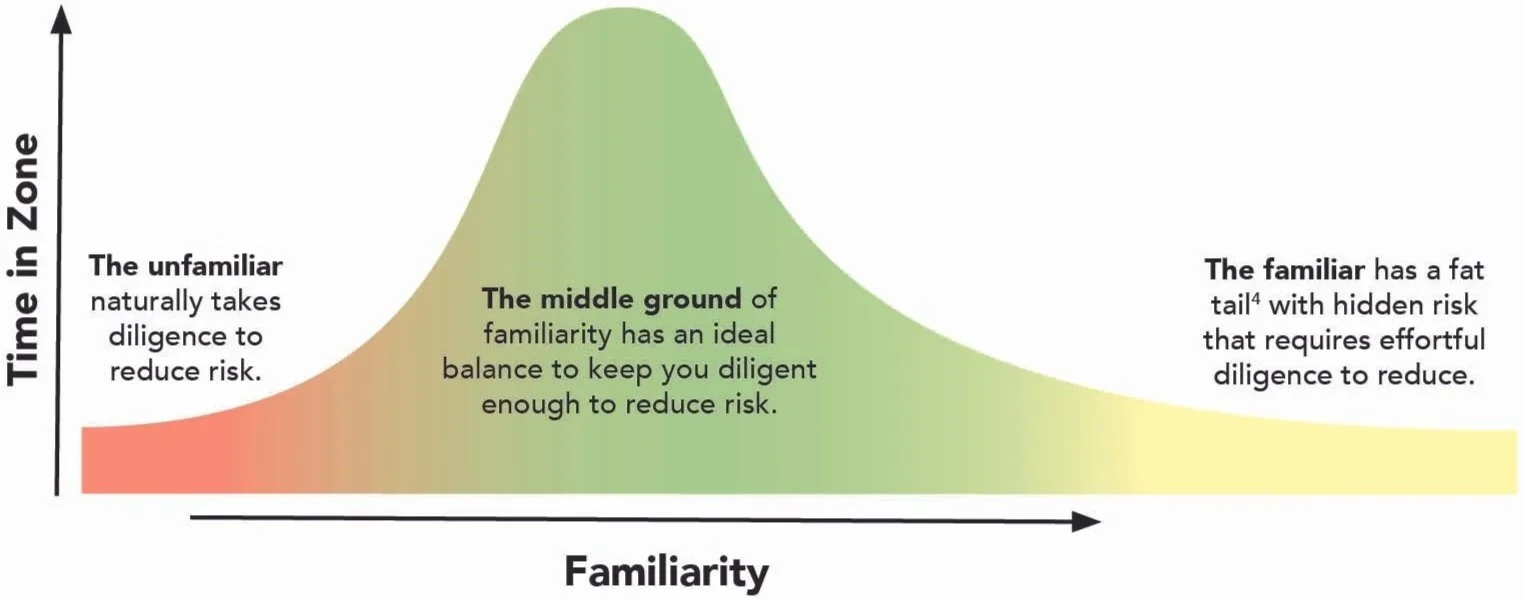
It seems the situation lay on two ends of a familiarity spectrum. On one end is the familiar: the terrain was a routine trip for the guides. We all become complacent in the familiar because constant diligence is exhausting. At the other end of the spectrum is the unfamiliar: the extreme storm was outside their norm. The trick is to recognize when to upshift our diligence. Maybe kill criteria3 would work? Any suggestions?
Familiar situations require effortful diligence to reduce risk.
Some reports said: travel one at a time in avalanche terrain. Yeah, that’s a good guideline, but it’s not a rule5. As avalanche psychology researcher Forest Wagner told me, “static rules replace active thinking.” Much of Alaska would be off limits with that one-at-a-time armchair backcountry skier rule. Instead, adjust your spacing for the conditions. That covers a range from staying at home to party skiing. Rules are for bowling6.
Avalanche accidents do not have simple causes or answers. Both the mountains and the humans that travel through them are more complex and uncertain than our little minds can comprehend. As IFMGA Mountain Guide Dylan Taylor told me, “blaming is not something that happens in the peer group of guides.” If you must point a finger, blame the mountains. They are mean and they don’t care about you.
In talking with the public about this accident I realize that I’ve lost track of how most people think about avalanche accidents. I want to understand their thinking so I can be a better avalanche instructor and promote a backcountry culture of humility, respect, and restraint in a country that rewards the opposite. I have some work to do.
Notes
1 Taleb, Nassim. 2018. Skin In The Game.
2. Avalanche Terrain Exposure Sale, avalanche.org/avalanche-encyclopedia/.
3. Duke, Annie. 2022. Quit: The Power of Knowing When to Walk Away.
4. Taleb, Nassim. 2012. Antifragile.
5. Bruce Tremper told me: “Colorado 90% of their fatalities are on a persistent weak layer, yet PWL accounts for only 15% of the events. Which probably means there are too many people on the slope or runout at the same time with big, connected avalanches.” Maybe I’m totally wrong, or one at a time should be a rule in Colorado?
6 “This is not 'Nam. This is bowling. There are rules.” Walter to Smokey, The Big Lebowski.